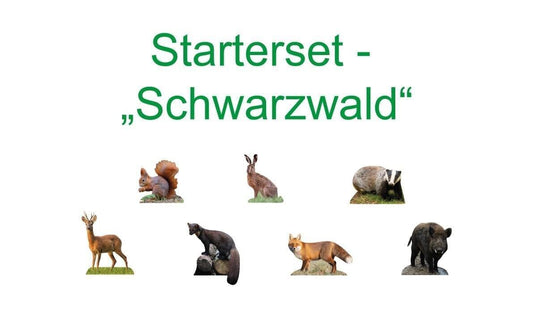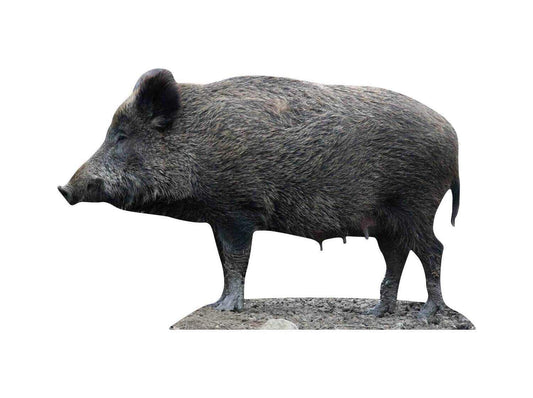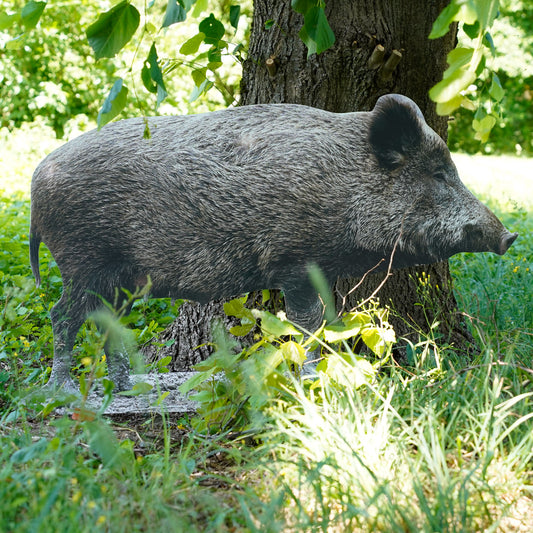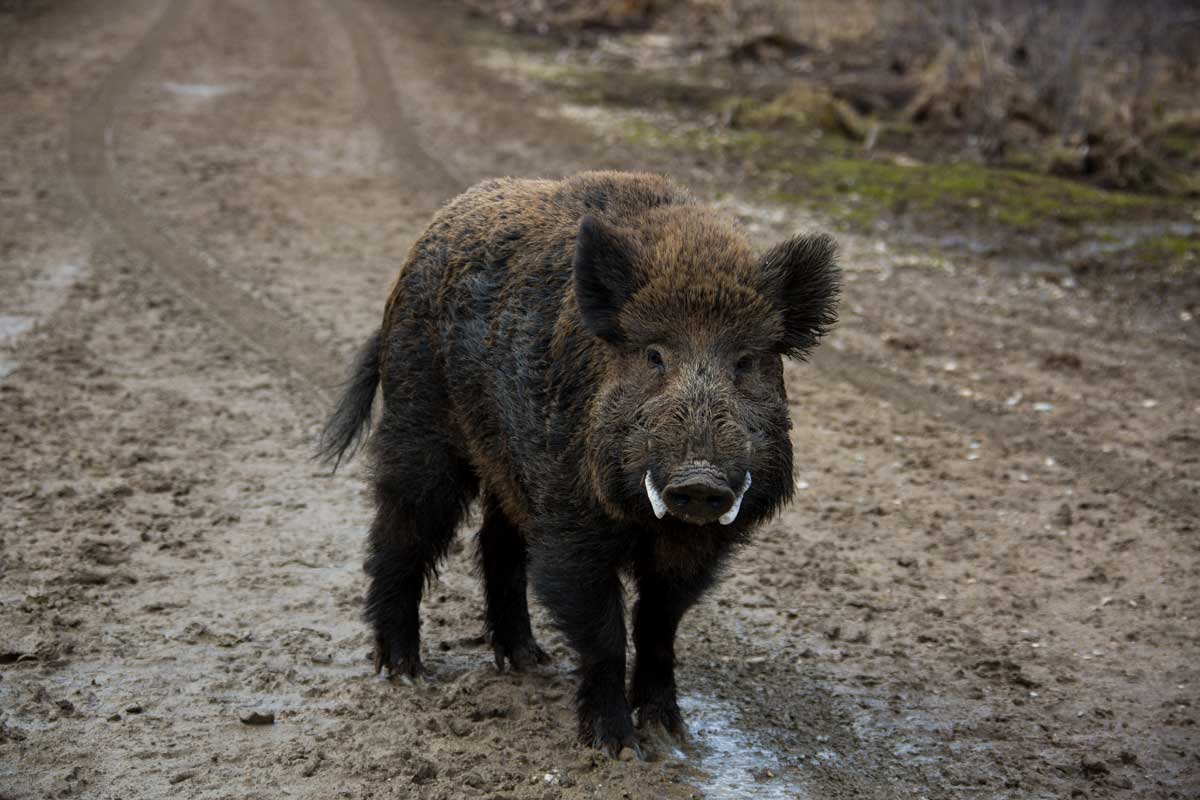
wild boar

The wild boar, known for its adaptability and hardy nature, plays an important role in its ecosystem but can become a pest in agricultural areas. This fact sheet provides a comprehensive overview of the biology and management of wild boars and supports awareness-raising for their sustainable management and the protection of biodiversity.

As an omnivore, wild boars eat roots, tubers, insects, small animals, carrion, and plant material. Their life expectancy is 10 to 12 years.

  • Scientific classification

    • Class: Mammalia (mammals)
    • Order: Artiodactyla (even-toed ungulates)
    • Family: Suidae (pigs)
    • Genus: Sus
    • Species: S. scrofa (wild boar)
  • Physical characteristics

    • Size (male): 90-180 cm body length
    • Size (female): 80-160 cm body length
    • Weight (male): 130-250 kg
    • Weight (females): 80-160 kg
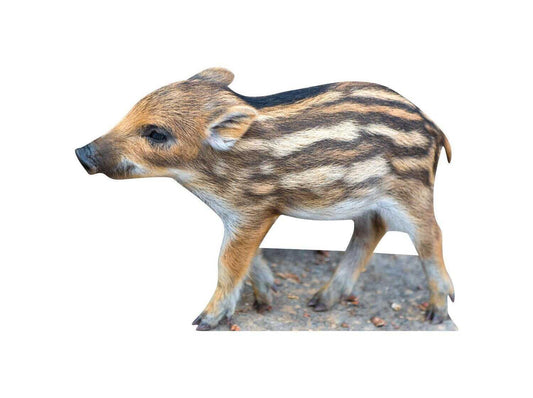
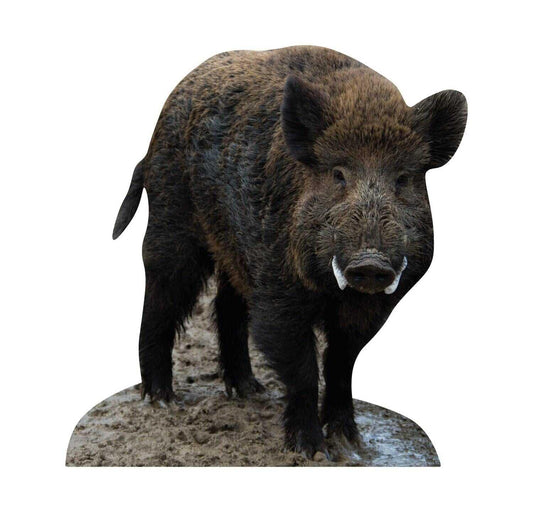
    • Special features: Robust build, short legs, large heads. Their fur is typically dark with lighter bristles. Young piglets have yellowish-brown stripes for camouflage.
  • Habitat and distribution

    • Common regions: Europe, large parts of Asia, introduced in North America and Australia
    • Habitat: Dense forests, undergrowth, agricultural areas, and urban fringe areas
    • Adaptability: Very high, can survive in a variety of environments
  • Nutrition

    • Diet: Omnivore
    • Typical food: roots, tubers, insects, small animals, carrion and plant material
  • Reproduction and lifestyle

    • Mating season: Mainly in late autumn
    • Gestation period: Approx. 115 days
    • Litter size: Average 4-6 piglets, can be up to 10 in favorable conditions
    • Social structure: Live in groups (packs) led by an experienced female
  • Lifespan and protection status

    • Life expectancy: Up to 10-12 years in the wild, up to 20 years under protected conditions
    • Endangered status: Not endangered, in many areas even considered a pest due to overpopulation and damage to agriculture
    • Management: Regulated hunting to control populations, especially in areas with frequent wild boar damage
  • Tracks and Footprints

    • Wild boars (Sus scrofa) leave a wide track: in addition to the two hoof prints, the lateral dew claws are often also impressed – a sure distinguishing feature.
    To the tracking stamp 
  • This is how big the wild boar really is

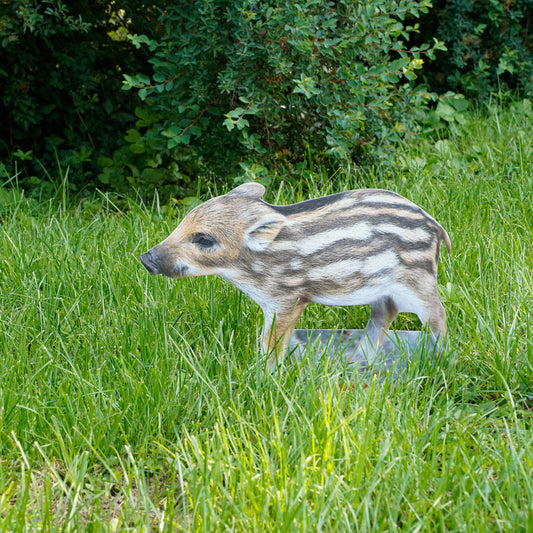
    • Piglet: 43 × 30 cm
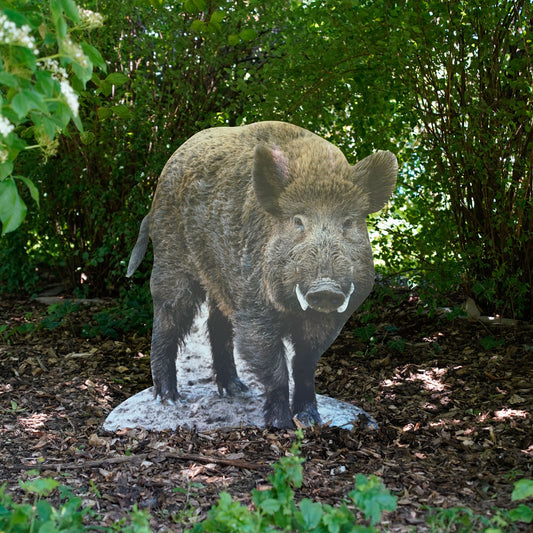
    • Boar: 80 × 84 cm
    • Sow: 121 × 76 cm

    Dimensions of the life-size cutouts (width × height), printed at a scale of 1:1.

    To the exhibitors 

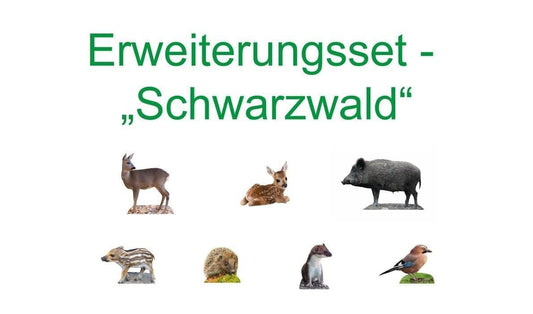
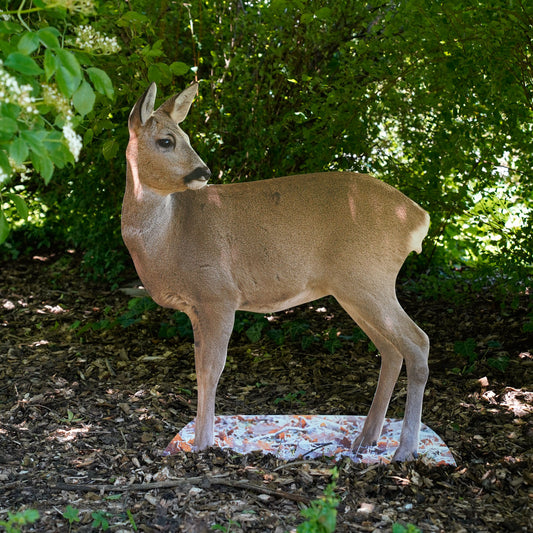
Vom Steckbrief zum Original – entdecke unsere Produkte rund um das Thema wild boar.

Jetzt entdecken