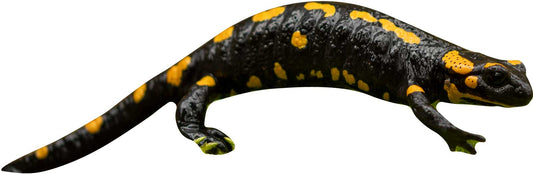
fire salamander
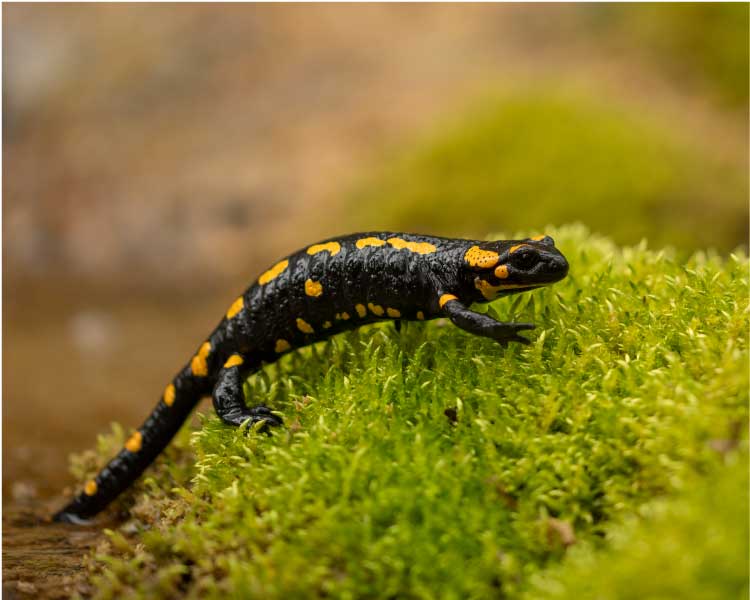
Known for its striking colors and its role as an indicator of healthy ecosystems, the fire salamander is a fascinating amphibian that lives in moist forests and waterways. This fact sheet provides a detailed overview of the fire salamander's biology and lifestyle and emphasizes the importance of its protection and conservation in natural habitats.
fire salamander Products
-
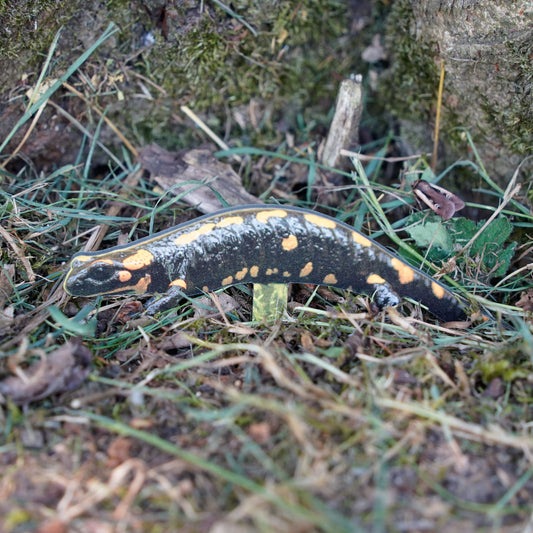
Animal display fire salamander
No reviewsRegular price 9,90€Regular priceUnit price / perSale price 9,90€ -
Animal display fire salamander - outdoor set
No reviewsRegular price 10,90€Regular priceUnit price / perSale price 10,90€
Profile: fire salamander
-
Scientific classification
- Class: Amphibians (Amphibia)
- Order: Urodela
- Family: Salamandridae (true salamanders)
- Genus: Salamandra
- Species: S. salamandra (fire salamander)
-
Physical characteristics
- Size: Body length of 15-25 cm
- Weight: 50-150 g
- Special features: Black, shiny skin with striking yellow or orange spots, strong build, long tail and four limbs.
-
Habitat and distribution
- Common regions: Europe, especially in temperate zones
- Habitat: Moist forests, mountainous regions, near bodies of water such as streams and ponds; requires shady and moist places.
-
Nutrition
- Diet: Carnivore
- Typical food: insects, spiders, snails, small vertebrates and other invertebrates.
-
Reproduction and lifestyle
- Breeding season: spring to summer
- Reproduction: Eggs are laid in water or moist substrates; the larvae develop in water.
- Lifestyle: Mainly nocturnal, hiding under stones, leaves or in burrows during the day.
-
Lifespan and protection status
- Life expectancy: Up to 20 years in the wild
- Endangered status: Not threatened, but threatened by habitat loss, pollution and disease.
- Protection measures: preservation and protection of habitats, control of diseases and prevention of road traffic casualties.
-
So groß ist der Feuersalamander wirklich
Zu den Aufstellern- Feuersalamander: 12,5 × 4 cm
Maße der lebensgroßen Aufsteller (Breite × Höhe), gedruckt im Maßstab 1:1.