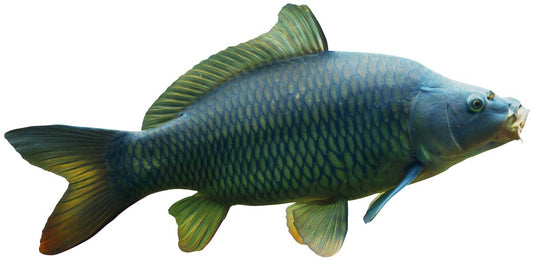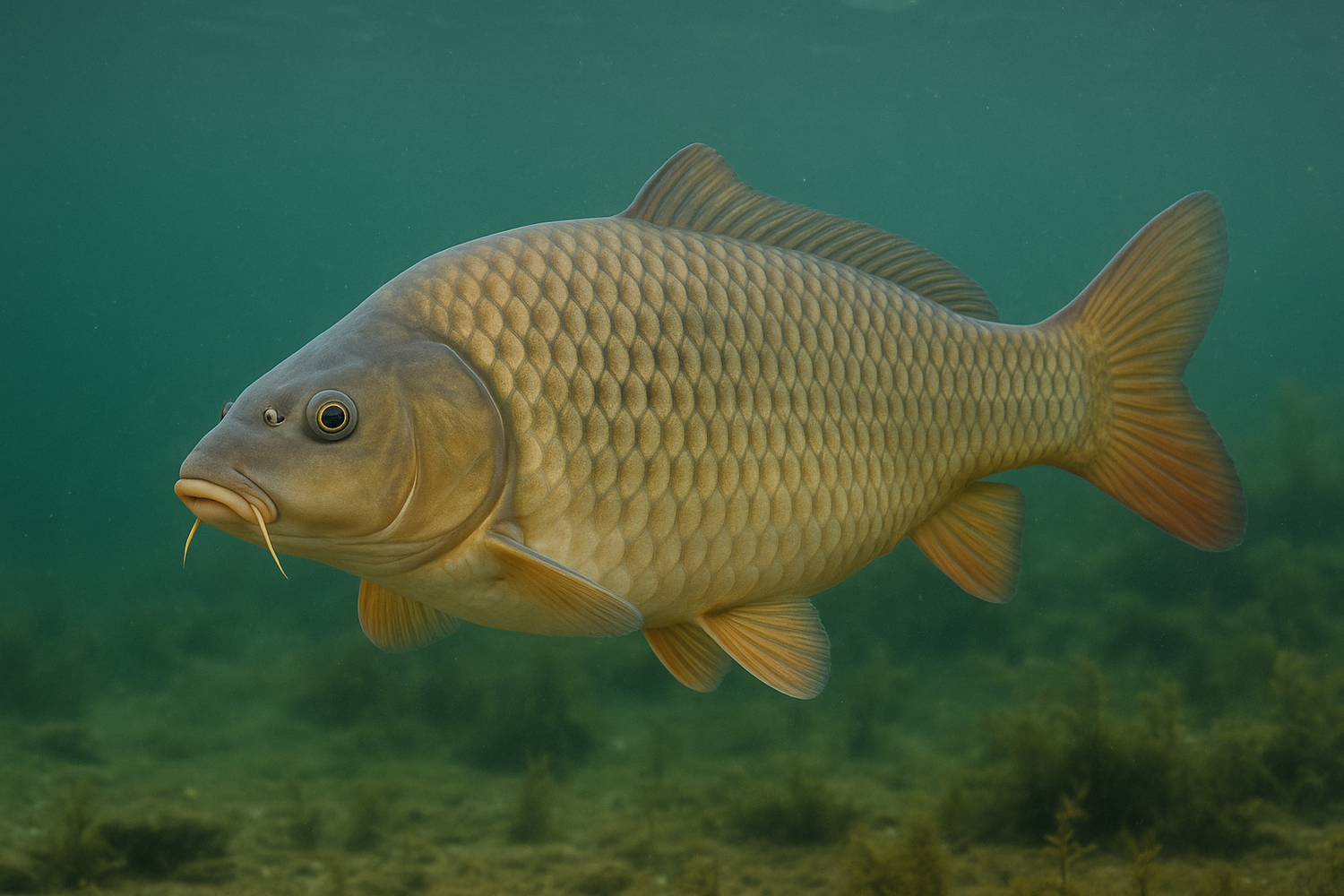
carp

Carp measure 40 to 80 cm in length and weigh between 2 and 15 kg. As an omnivore, carp feed on aquatic plants, insects, worms, snails, small crustaceans, and organic detritus. Their life expectancy is 20 to 30 years.

  • Scientific classification

    • Class: Bony fishes (Actinopterygii)
    • Order: Cypriniformes
    • Family: Carp fishes (Cyprinidae)
    • Genus: Cyprinus
    • Species: C. carpio (carp)
  • Physical characteristics

    • Size: 40-80 cm, can reach over 1 m in exceptional cases
    • Weight: 2-15 kg, in extreme cases up to 30 kg
    • Special features: Scale-covered body, two barbels on the mouth, varying color from golden brown to greenish-grey, broad dorsal fin
  • Habitat and distribution

    • Common regions: Europe, Asia
    • Habitat: Freshwater bodies of water such as lakes, ponds, rivers and slow-flowing canals; prefers still or gently flowing, plant-rich waters
  • Nutrition

    • Diet: Omnivore
    • Typical food: aquatic plants, insects, worms, snails, small crustaceans and organic detritus
  • Reproduction and lifestyle

    • Spawning season: Spring to early summer (approx. 18–22°C water temperature)
    • Eggs: 100,000-300,000 eggs per female
    • Lifestyle: Sociable, often found in schools; prefers calm waters; can move to great depths to exploit food sources
  • Lifespan and protection status

    • Life expectancy: 20-30 years, in exceptional cases up to 50 years
    • Endangered status: Not endangered, but locally threatened by overfishing, water pollution and habitat changes
    • Protective measures: species-appropriate fish farming, water protection, preservation of natural spawning areas
  • That's how big the carp really is

    • Carp: 70 × 35 cm

    Dimensions of the life-size stand-ups (width × height), printed to scale 1:1.

    To the exhibitors