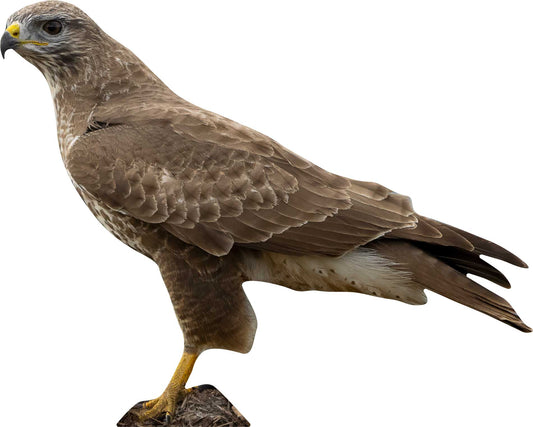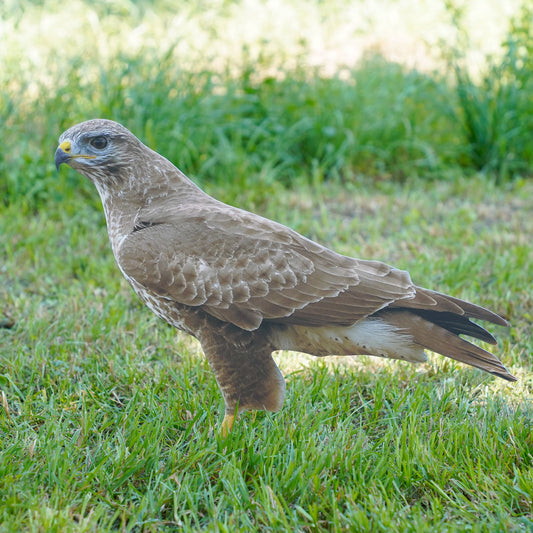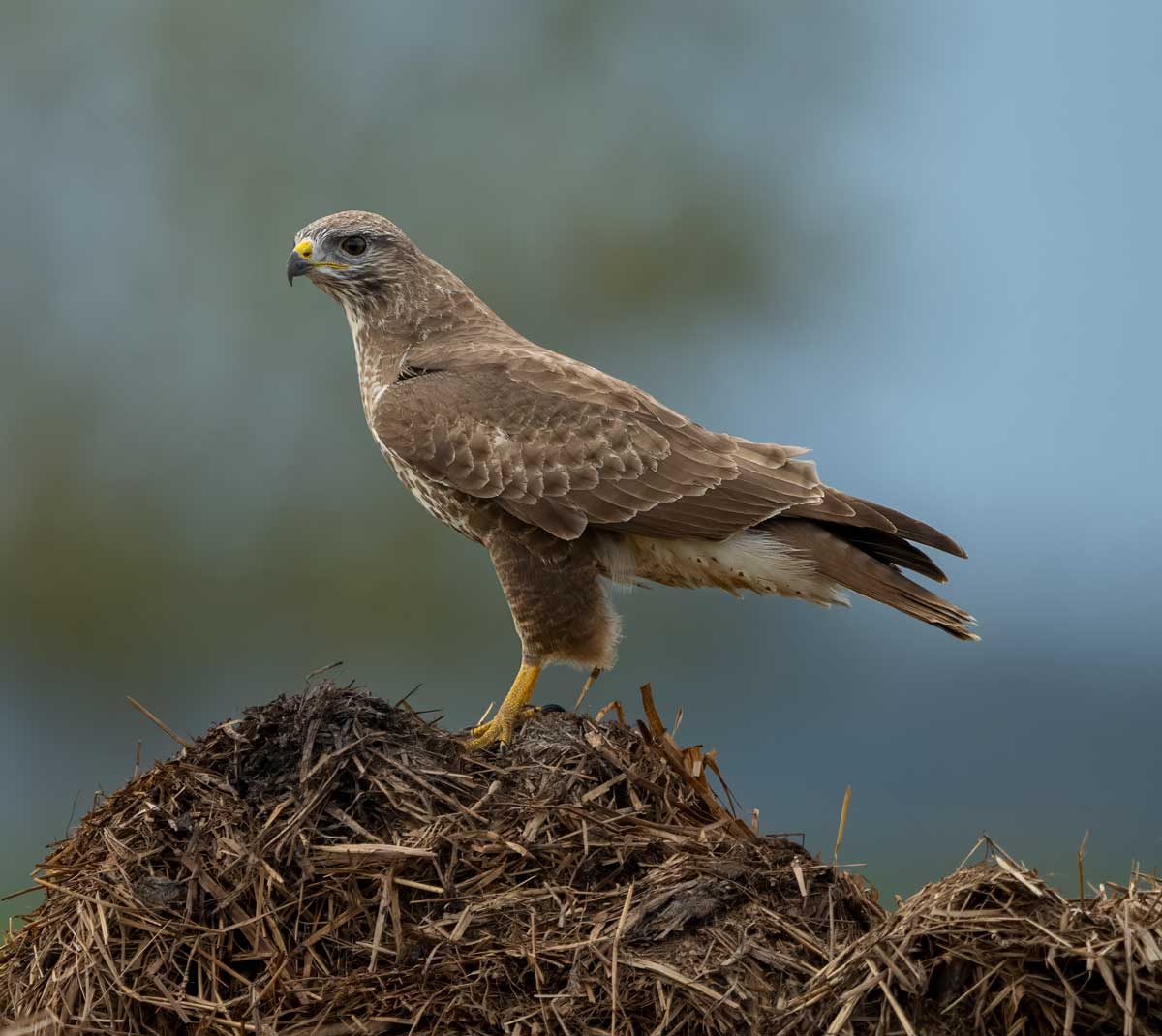
buzzard
The Common Buzzard, a widespread bird of prey, plays an important role in the ecosystem by controlling small mammal populations. This fact sheet provides a detailed overview of the biology and ecology of the Common Buzzard and highlights the importance of conservation measures to preserve its natural environment and nesting sites.
The buzzard reaches a wingspan of 113 to 128 cm and weighs 425 to 1400 g. Its diet includes The diet can vary seasonally, based on the availability of prey. Its life expectancy is up to 25 years.
Buzzard for garden, nature trail & teaching
-
Animal display buzzard
No reviewsRegular price From 43,90€Regular priceUnit price / perSale price From 43,90€ -
Animal display buzzard - outdoor set
No reviewsRegular price 51,70€Regular priceUnit price / perSale price 51,70€
Profile: buzzard
-
Scientific classification
- Class: Aves (birds)
- Order: Accipitriformes (birds of prey)
- Family: Accipitridae (Accipitridae)
- Genus: Buteo
- Species: B. buteo (Common Buzzard)
-
Physical characteristics
- Size: Body length of 51-57 cm
- Wingspan: 113-128 cm
- Weight: 425-1400 g, depending on gender and subspecies
- Special features: Broad wings and short tail, typical of buzzards; plumage varies from almost pure white to dark brown.
-
Habitat and distribution
- Common regions: Widely distributed in Europe, parts of Asia and North Africa
- Habitat: Open landscapes such as fields, meadows and light forests, avoids dense forests and high mountains
- Adaptability: Very high, can live in different environments from sea level to medium altitudes
-
Nutrition
- Diet: Mainly small mammals, especially field mice; also birds, insects, worms and sometimes carrion
- Typical Diet: The diet may vary seasonally based on the availability of prey.
-
Reproduction and lifestyle
- Mating season: Spring
- Nest type: Large nests in trees, often built on old crow nests
- Number of eggs: 2-4 eggs
- Incubation period: About 33-38 days
- Social structure: Mostly solitary, except during the mating season, forming pairs that can stay together for years
-
Lifespan and protection status
- Life expectancy: Up to 25 years in the wild, but on average less
- Endangered status: Not threatened; stable populations thanks to widespread distribution and adaptability
- Conservation measures: Habitat protection is crucial, especially the preservation of nesting sites and hunting areas
-
How big the buzzard really is
To the exhibitors- Common Buzzard: 50 × 36 cm
Dimensions of the life-sized cutouts (width × height), printed at a 1:1 scale.
Vom Steckbrief zum Original – entdecke unsere Produkte rund um das Thema buzzard.
Jetzt entdecken