grass snake

The grass snake, one of the most common snake species in Europe, is known for its adaptability and its important ecological balance. This fact sheet provides a detailed overview of the biology and ecology of the grass snake and highlights the importance of its protection and conservation in natural habitats.

The grass snake, one of the most common snake species in Europe, is known for its adaptability and its important ecological balance. This fact sheet provides a detailed overview of the biology and ecology of the grass snake and highlights the importance of its protection and conservation in natural habitats.

  • Scientific classification

    • Class: Reptilia (reptiles)
    • Order: Squamata (squamata)
    • Family: Colubridae (snakes)
    • Genus: Natrix
    • Species: N. natrix (grass snake)
  • Physical characteristics

    • Size: Average length of 60-100 cm
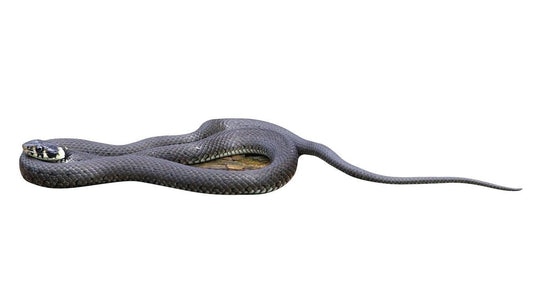
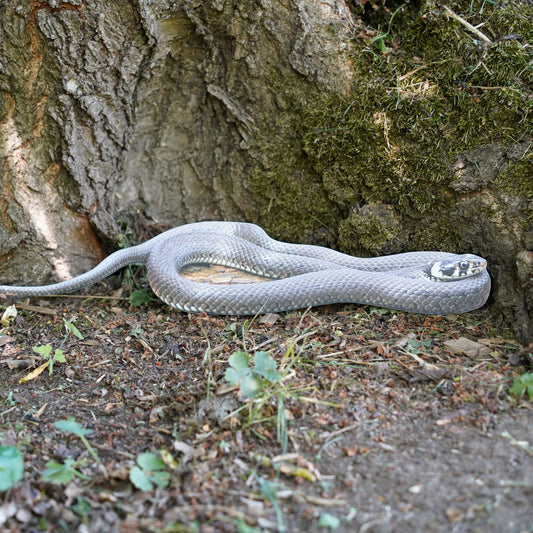
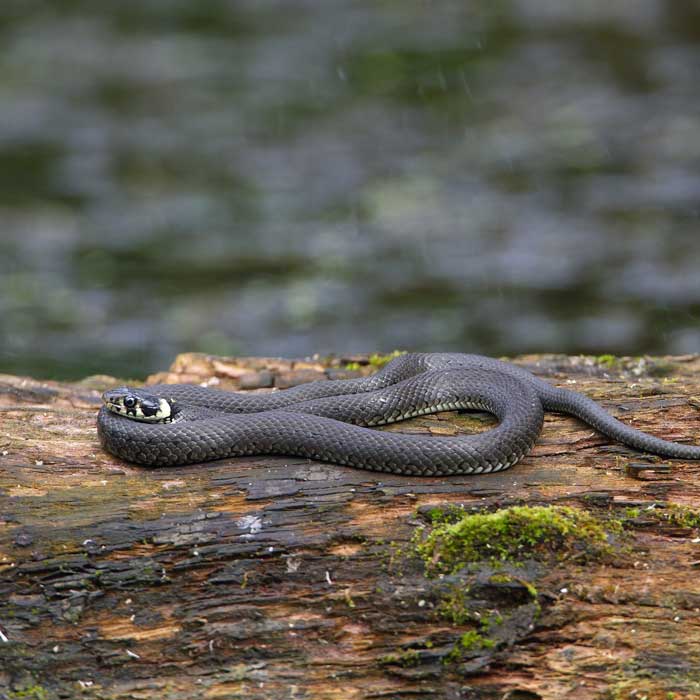
    • Special features: Slender body, smooth scales, olive to grey base colouring with dark spots and stripes, characteristic whitish chin band.
  • Habitat and distribution

    • Common regions: Europe, parts of Asia
    • Habitat: Water bodies in a variety of habitats such as wetlands, river banks, lakes, but also in gardens and parks.
  • Nutrition

    • Diet: Carnivore
    • Typical food: Amphibians such as frogs, toads, newts, occasionally small fish and rodents.
  • Reproduction and lifestyle

    • Mating season: Spring
    • Reproduction: Egg laying from June to July, 10-40 eggs per clutch
    • Brood care: Females lay their eggs in decaying plant materials, no brood care after hatching.
    • Social structure: Solitary outside of the mating season, often found near bodies of water.
  • Lifespan and protection status

    • Life expectancy: Up to 15 years in the wild
    • Endangered status: Not threatened, but local populations may be affected by habitat loss and road traffic.
    • Conservation measures: conservation and protection of wetlands, creation of migration corridors, measures to prevent habitat fragmentation.
  • How Big Grass Snakes Really Are

    • Grass Snake: 50 × 8 cm

    Dimensions of the life-size stand-ups (width × height), printed at a 1:1 scale.

    To the exhibitors