jay

The Eurasian Jay, a conspicuous member of the corvid family, plays an important role in the ecosystem by dispersing seeds and controlling insect populations. This fact sheet provides a detailed overview of the Eurasian Jay's biology and ecology and highlights the importance of protecting its habitats and food sources.

With a wingspan of 52 to 58 cm and a weight of 140 to 190 g, the adult Eurasian Jay is fully grown. As an omnivore, the Eurasian Jay eats acorns, nuts, seeds, and berries, but also invertebrates, bird eggs, and young birds. Its life expectancy is up to 8 years.

  • Scientific classification

    • Class: Aves (birds)
    • Order: Passeriformes (Passerines)
    • Family: Corvidae (corvids)
    • Genus: Garrulus
    • Species: G. glandarius (Jay)
  • Physical characteristics

    • Size: Body length of 31-35 cm
    • Wingspan: 52-58 cm
    • Weight: 140-190 g
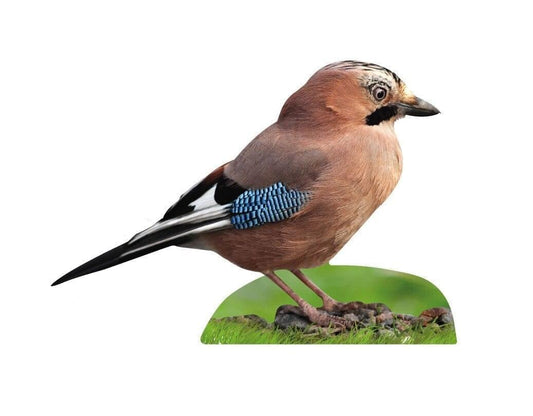
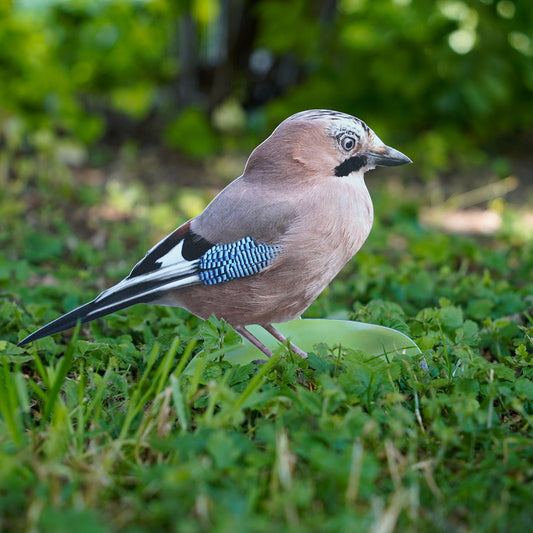
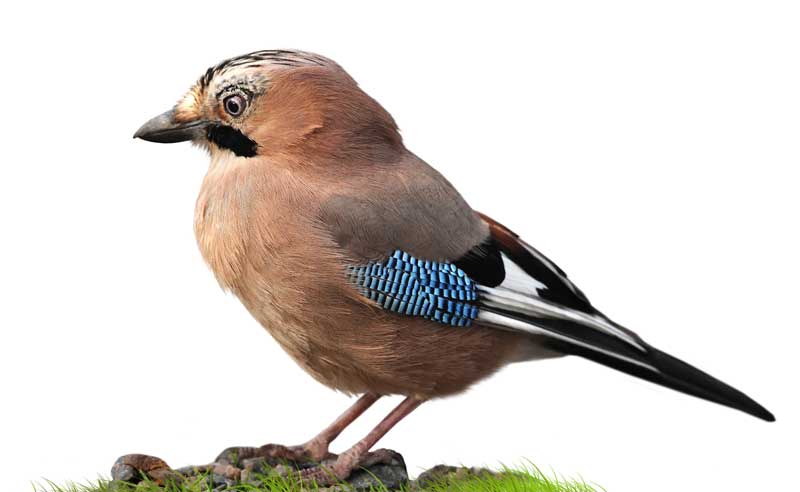
    • Special features: Colorful bird with striking blue-black, white and rust-brown plumage; distinctive black stripe around the eyes and a distinctive crest.
  • Habitat and distribution

    • Common regions: Europe, Asia, parts of North Africa
    • Habitat: Deciduous and mixed forests, parks, gardens, but prefers oak and beech forests.
    • Adaptability: Moderately high, especially in areas with sufficient food supply and suitable nesting sites.
  • Nutrition

    • Diet: Omnivore
    • Typical food: acorns, nuts, seeds, berries, but also invertebrates, bird eggs and young birds.
  • Reproduction and lifestyle

    • Breeding season: spring to summer
    • Nest type: High in trees, often in dense coniferous forests
    • Number of eggs: 4-6 eggs per clutch
    • Incubation period: Approx. 16-17 days
    • Social structure: Usually in pairs or small family groups; territorial during the breeding season.
  • Lifespan and protection status

    • Life expectancy: Up to 8 years in the wild
    • Threat status: Least concern; stable populations, although habitat loss and pesticide use may be problematic.
    • Conservation measures: Preservation and protection of forests and parks to secure habitat and food sources.
  • How big the Eurasian Jay really is

    • Jay: 28 × 19 cm

    Dimensions of the life-size cutouts (width × height), printed at a 1:1 scale.

    To the exhibitors 

From fact sheet to the real thing – discover our products on the subject of jay.

Discover now