
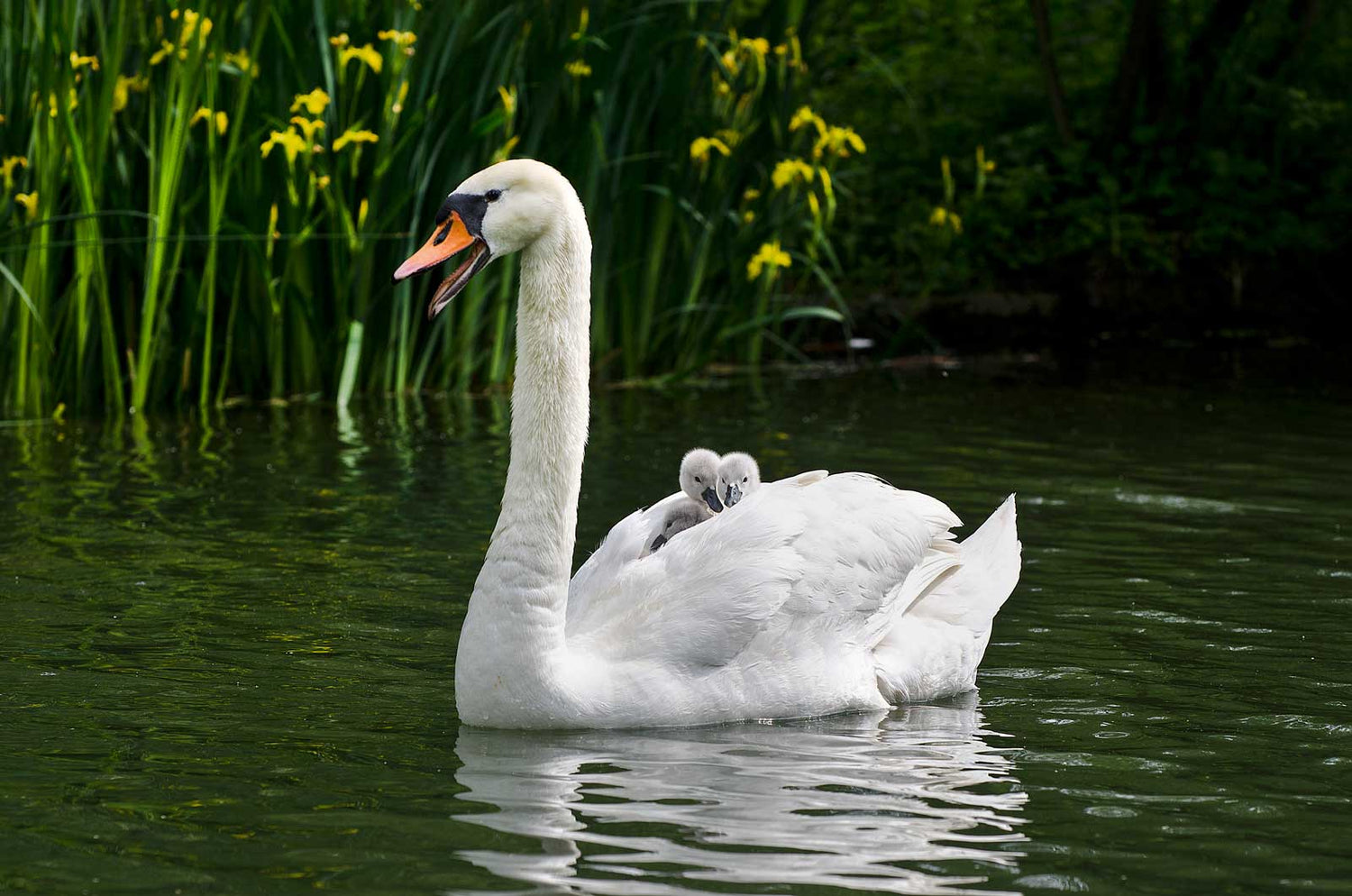
swan
The swan, a majestic bird with impressive size and graceful behavior, is common in both natural and urban waters. This fact sheet provides a detailed overview of the swan's biology and lifestyle and highlights the importance of its protection and conservation in different habitats.
With a wingspan of 200 to 250 cm and a weight of 8 to 15 kg, the swan reaches its full size. As an omnivore, the swan eats aquatic plants, algae, small fish, insects, and snails. Its life expectancy is 10 to 20 years.
swan Products
Profile: swan
-
Scientific classification
- Class: Birds (Aves)
- Order: Ducks (Anseriformes)
- Family: Ducks (Anatidae)
- Genus: Cygnus
- Species: Various species, including the mute swan (C. olor), the black swan (C. atratus) and the tundra swan (C. columbianus)
-
Physical characteristics
- Size: Body length from 125-180 cm
- Wingspan: 200-250 cm
- Weight: 8-15 kg
- Special features: Long, curved necks, large bodies with strong wings, mostly white or black plumage, long legs with webbed feet.
-
Habitat and distribution
- Common regions: Europe, Asia, North America, Australia (depending on species)
- Habitat: Calm waters such as lakes, ponds, rivers and wetlands; often found in urban parks and gardens.
-
Nutrition
- Diet: Omnivorous
- Typical food: aquatic plants, algae, small fish, insects, snails; occasionally also small invertebrates.
-
Reproduction and lifestyle
- Breeding season: spring to summer
- Nesting behavior: Construction of nests from plant material on the shore or on floating platforms
- Eggs: 4-8 eggs per brood
- Reproduction: Pair bonding, usually lifelong partners; joint brood care by both parents.
-
Lifespan and protection status
- Life expectancy: 10-20 years in the wild
- Endangered status: Generally not threatened, but locally threatened by habitat loss, pollution and hunting.
- Conservation measures: conservation and protection of habitats, education and protective measures against illegal hunting.