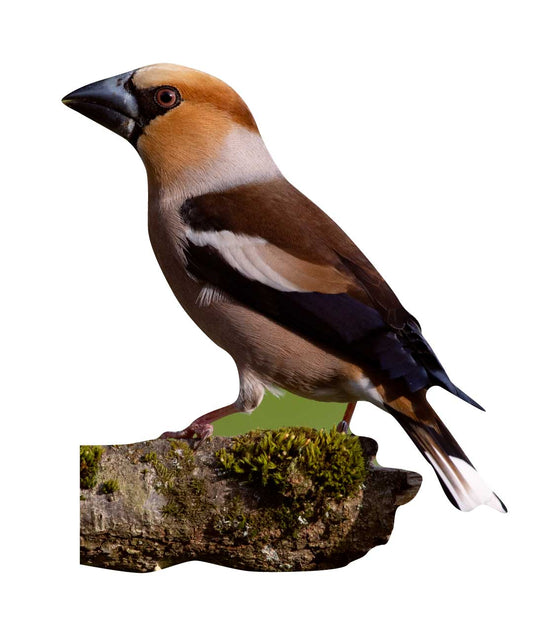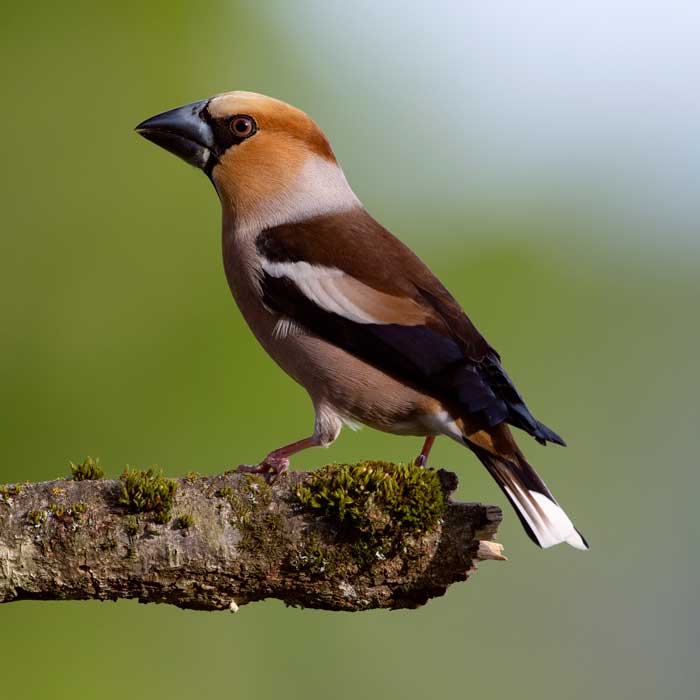
Hawfinch
The hawfinch, an imposing member of the finch family, is characterized by its powerful beak and its preference for hard seeds. This fact sheet provides a detailed overview of the biology and ecology of the hawfinch and emphasizes the importance of its protection and conservation in natural and human habitats.
Hawfinch Products
-
Animal display wild rabbit
No reviewsRegular price From 9,90€Regular priceUnit price / per12,90€Sale price From 9,90€Sale -
Animal display Hawfinch - Outdoor Set
No reviewsRegular price 15,30€Regular priceUnit price / per12,90€Sale price 15,30€
Profile: Hawfinch
-
Scientific classification
- Class: Aves (birds)
- Order: Passeriformes (Passerines)
- Family: Fringillidae (finches)
- Genus: Coccothraustes
- Species: C. coccothraustes (Groanfinch)
-
Physical characteristics
- Size: Body length of 18-23 cm
- Weight: 50-70 g
- Special features: Powerful build, large head, massive beak, strong legs and feet, striking black facial mask, bright orange belly.
-
Habitat and distribution
- Common regions: Europe, Asia, North Africa
- Habitat: Diverse, from deciduous and coniferous forests to parks and gardens to rural areas with abundant tree cover.
-
Nutrition
- Diet: Herbivore
- Typical food: seeds, especially hard seeds of beech, oak and pine, but also berries, buds and insects in summer.
-
Reproduction and lifestyle
- Breeding season: spring to summer
- Nest building: In trees, often high in dense treetops
- Egg laying: 3-5 eggs per clutch
- Brood care: Both parents participate in raising the young
- Social structure: Mostly in pairs or small family groups.
-
Lifespan and protection status
- Life expectancy: Up to 10 years in the wild
- Endangered status: Not threatened, but habitat loss due to deforestation and intensive agriculture may affect local populations.
- Conservation measures: Preservation and protection of habitats with rich tree populations, promotion of sustainable forest management, creation of nesting boxes and feeding stations.
-
How big the Hawfinch really is
To the exhibitors- Hawfinch: 10 × 12 cm
Dimensions of the life-size standees (width × height), printed at a 1:1 scale.